Introduction
A van that starts for the first time on a cold morning and gets you to the job without drama is easy to take for granted. It is usually the result of small habits rather than luck. Good van maintenance is what keeps a vehicle reliable, safe and worth more when the time comes to sell or part exchange it.
Whether you drive a work van every day or rely on one for the occasional big job, a little attention goes a long way. As a family-run business, we see this across our fleet at Doncaster Van Centre every day.
Quick Summary
Picture a tradesperson who lives out of their van five days a week, then notices the steering feels a little off, and a warning light has crept onto the dashboard. This guide walks through how to catch problems like that early, what to check daily and weekly, and how regular servicing keeps a van dependable. By the end, you will have a practical routine to follow, plus a checklist to keep your van roadworthy for years to come.
Why van maintenance is worth the effort
A van is a working asset, and like any tool, it performs best when it is looked after. Neglect tends to show up at the worst possible moment, often when you have a delivery to make or a customer waiting.
Staying on top of upkeep protects three things at once. Regular maintenance helps keep you safe on the road, lowers the risk of costly repairs, and protects your van’s resale value when it’s time to sell.
There is also the cost of downtime. A day off the road can mean a missed job or a hire bill while your van sits in a workshop, and prevention is almost always cheaper than the repair that follows a problem left too long.
How to maintain a van between services
Servicing is only part of the picture. The habits you build between visits to the garage make just as much difference to how long your van lasts.
Most of these checks take a couple of minutes and need no tools. The trick is doing them regularly rather than waiting for something to feel wrong.
Daily walk-around checks
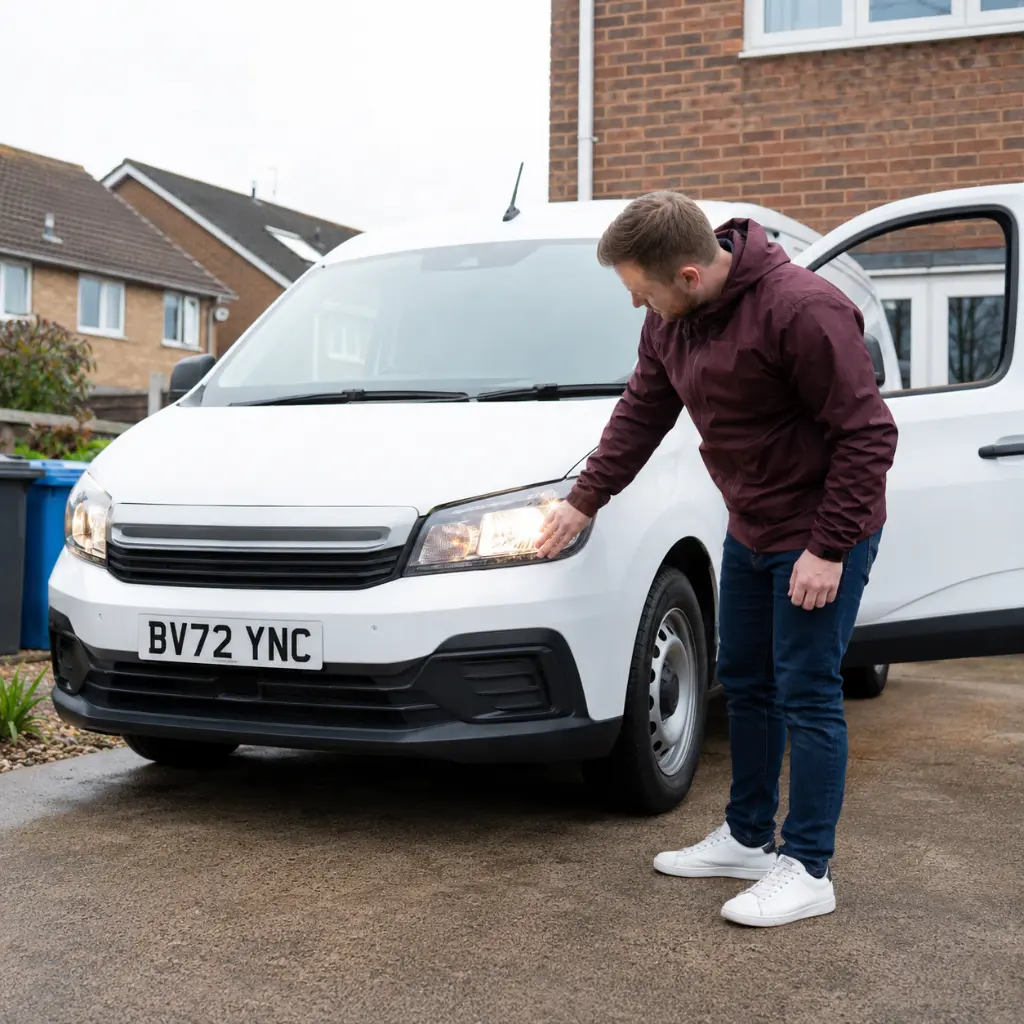
Before you set off, a quick walk around the van catches a surprising number of issues. Look for anything obvious, such as a soft tyre, a fluid puddle under the vehicle, or a cracked light lens.
Check that all your lights and indicators work, glance over the tyres, and make sure the windscreen and mirrors are clean. It sounds basic, yet these are the very things that lead to accidents and avoidable repairs.
Weekly checks
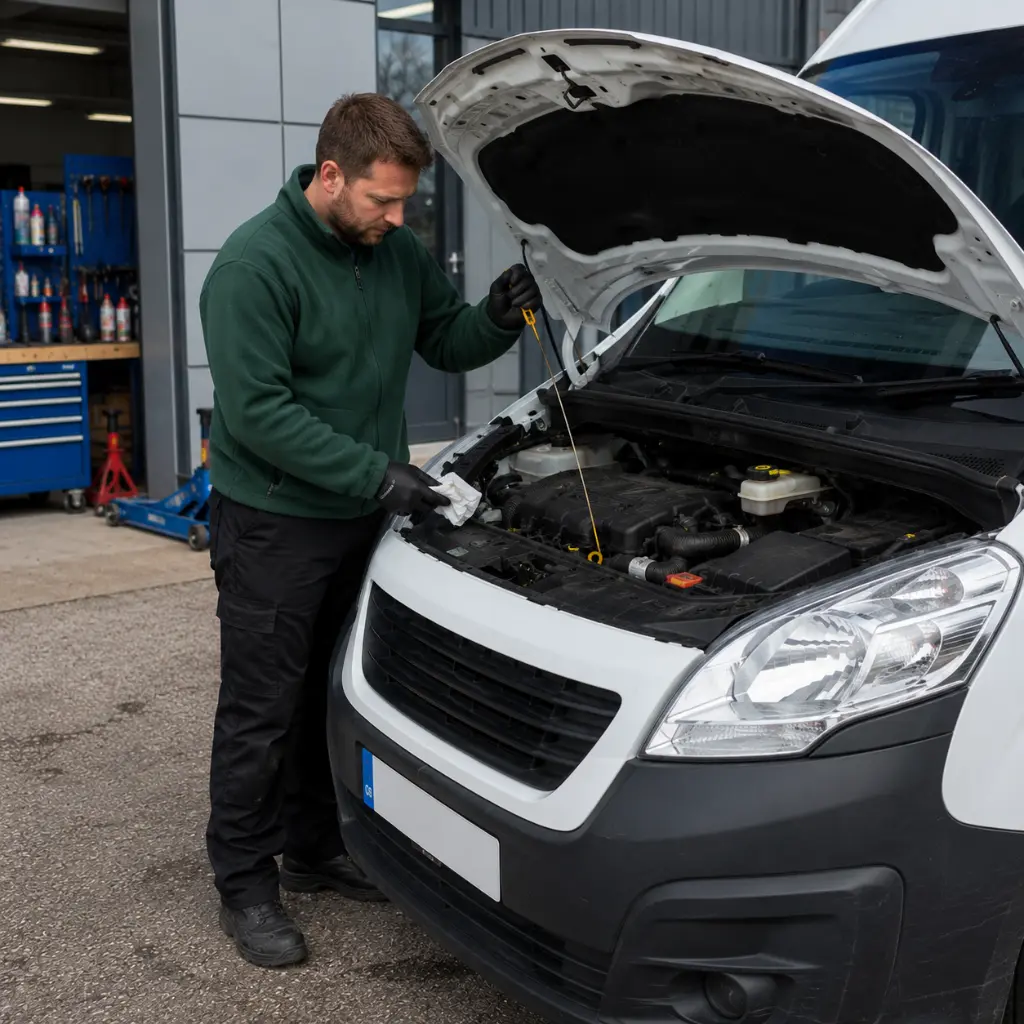
Once a week, go a little deeper. Check your engine oil level with the dipstick when the engine is cold, and top up the screenwash and coolant if they are low.
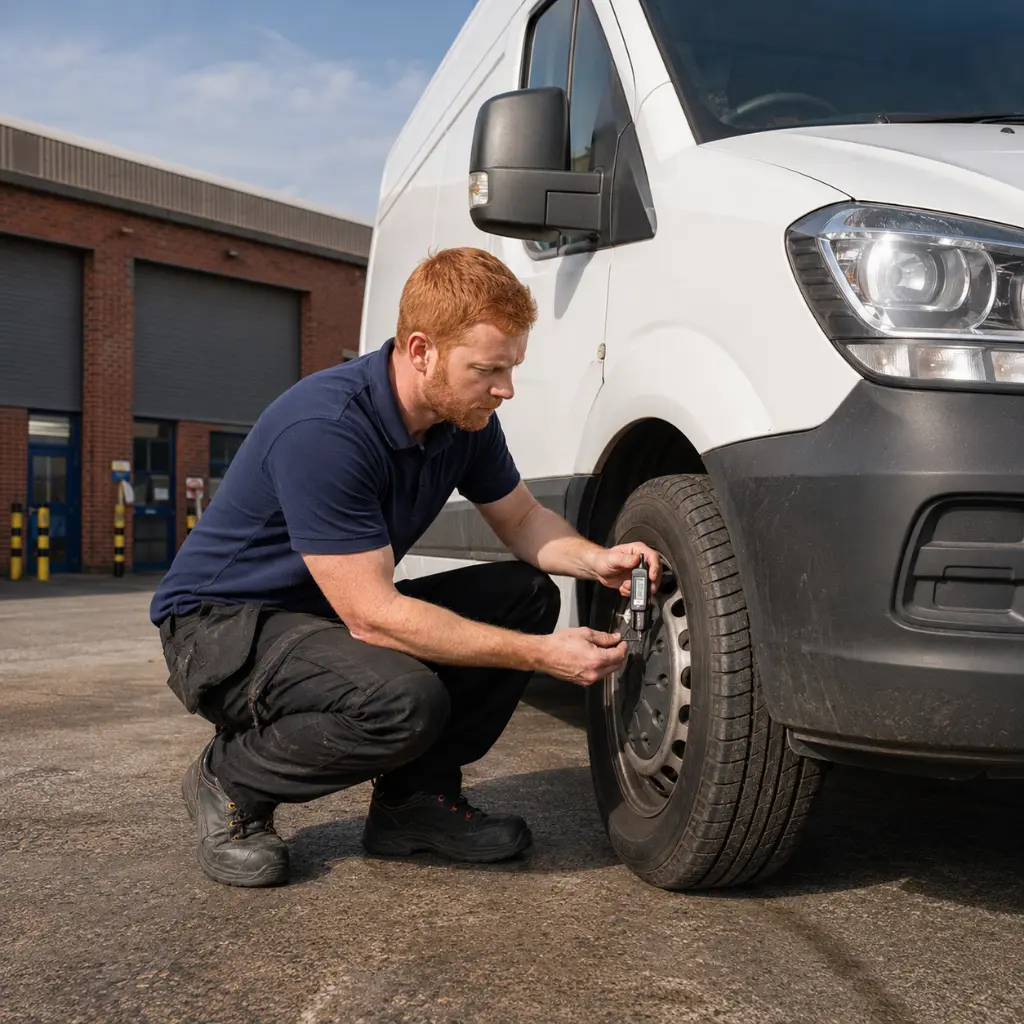
Test your tyre pressures with a gauge, including the spare, and set them to suit the load you carry. A van running heavy needs higher pressures than an empty one, and the correct figures are in your vehicle handbook.
Your essential van maintenance checklist
It helps to have a simple routine written down so nothing gets missed. Use the list below as a starting point and adjust it to how hard your van works.
- Daily: lights and indicators, tyres, windscreen and mirrors, and a look underneath for leaks.
- Weekly: engine oil level, coolant, screenwash, and tyre pressures and tread.
- Monthly: battery condition, wiper blades, brake feel, and a closer look at tyre wear.
- Before a long trip or a heavy load: fluids, tyres, brakes and a full walk-around.
Tyre tread must be at least 1.6mm across the central three-quarters of the tyre to be legal, though many drivers change sooner for safety. Uneven wear is often a sign of an alignment or suspension issue worth getting checked.
Van maintenance tips for the parts that cost the most
Some components wear faster and cost more to put right, so they deserve extra attention. Focusing your effort here gives you the best return for the time you spend.
Tyres
Tyres are your only contact with the road, and on a van, they carry serious weight. Keep them at the right pressure, check the tread regularly, and look for cracks, bulges or objects lodged in the rubber.
Rotating tyres in line with your handbook helps them wear evenly and last longer. Replace them in good time rather than pushing worn rubber through another winter.
Engine oil and fluids
Oil keeps the engine cool and protected, and it degrades over time. Running low on oil or delaying oil changes is one of the quickest ways to shorten an engine’s life.
Check the level often and change the oil and filter at the intervals your manufacturer recommends. While checking these, also inspect the coolant, brake fluid and power steering fluid levels, and make sure you identify and fix any leaks instead of simply topping them up.
Brakes
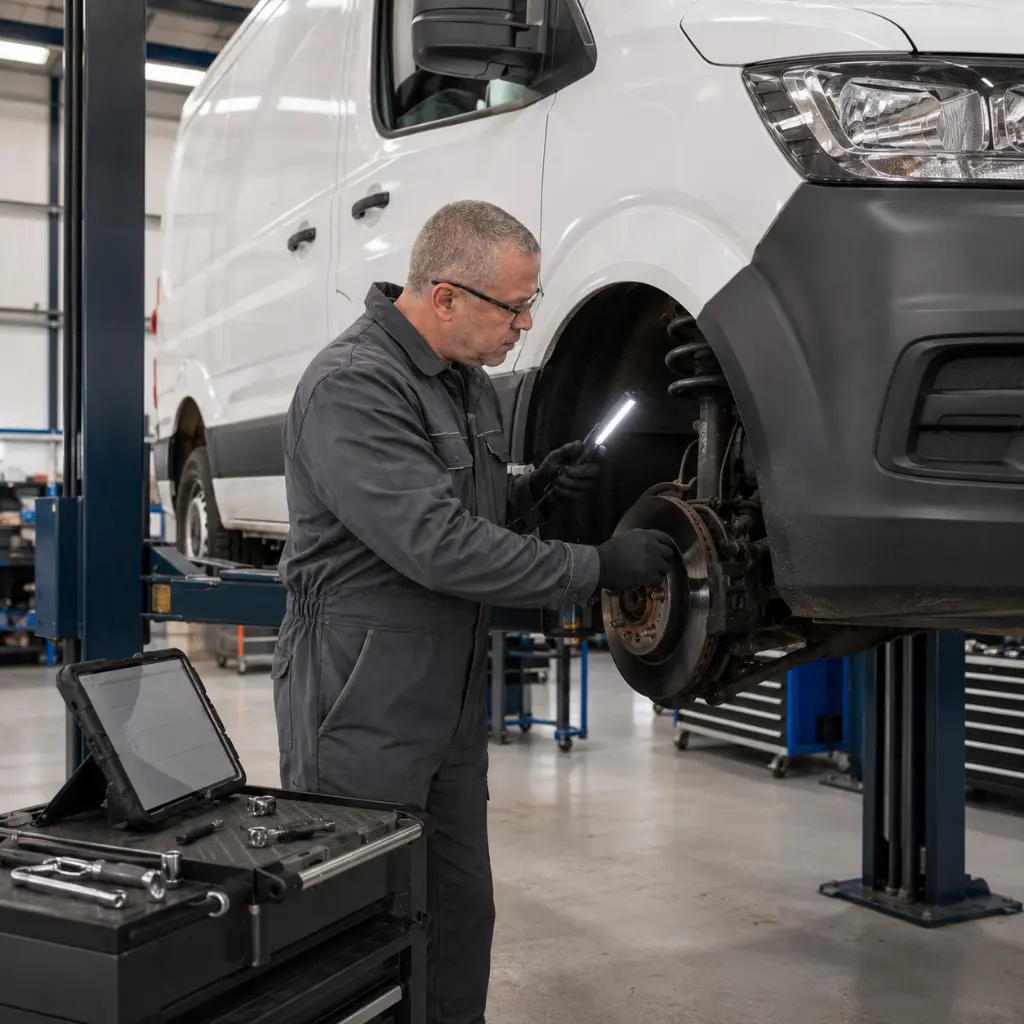
Brakes are a safety system first and a maintenance item second. If you hear grinding or squealing, feel a vibration through the pedal, or notice longer stopping distances, get them looked at without delay.
A loaded van puts more strain on brake pads and discs than an empty one, so heavy users should expect to replace pads more often. Never ignore a brake warning light on the dashboard.
Battery
A flat battery is one of the most common reasons a van refuses to start, especially in cold weather. Keep the terminals clean and free of corrosion, and have the battery tested if it is a few years old or slow to turn the engine over.
Short journeys and long spells parked up both drain a battery faster. If your van sits unused between jobs, an occasional longer journey helps keep the battery properly charged.
Servicing and following a van maintenance guide
Regular servicing is the backbone of a long-lived van. A professional service catches wear you cannot see and keeps everything working to the manufacturer’s specification.
The service schedule in your handbook is your van maintenance guide, and following it is the best way to stay ahead. It also helps protect any remaining manufacturer warranty and supports a strong service history.
Alongside regular servicing, your van will need an annual MOT once it reaches three years old. Keeping up with your annual van MOT helps confirm that your vehicle remains roadworthy while identifying potential safety issues before they develop into more expensive repairs.
Keep every service record together in one place, ideally in a logbook or folder, so you build a complete maintenance history over time. A full service history reassures the next owner and helps maintain your van’s value when you come to sell or part-exchange it.
When van maintenance is handled for you
Not everyone wants the ongoing responsibility of looking after a vehicle, which is why van hire is a practical choice for many drivers and businesses. When you hire, the upkeep, servicing and roadworthiness sit with the provider rather than with you.
Our Doncaster hire fleet is professionally maintained and fully insured, so if your own van is off the road for repairs you can hire a replacement van and keep working while it is sorted.
If you are ready to own rather than hire, buying a used van with a clear service history is the safer route. You can browse our used vans for sale, each supported by an RAC-backed warranty, easy finance and after-sales support from our team. For how hiring works day to day, our answers to common hiring questions cover the essentials.
Not sure which suits your workload? Speak to our team about the right van for the job, whether that is a short hire, a longer contract or a purchase.
Conclusion
Good van maintenance is rarely complicated. It is mostly about consistency: a few regular checks, oil and fluids kept topped up, tyres and brakes watched closely, and servicing done on time.
Do those things and your van will reward you with fewer breakdowns, lower running costs and a better price when you sell.
If you would rather leave the upkeep to someone else, or you are weighing hire against buying, get in touch, and our friendly team will help you find the right van for your work.